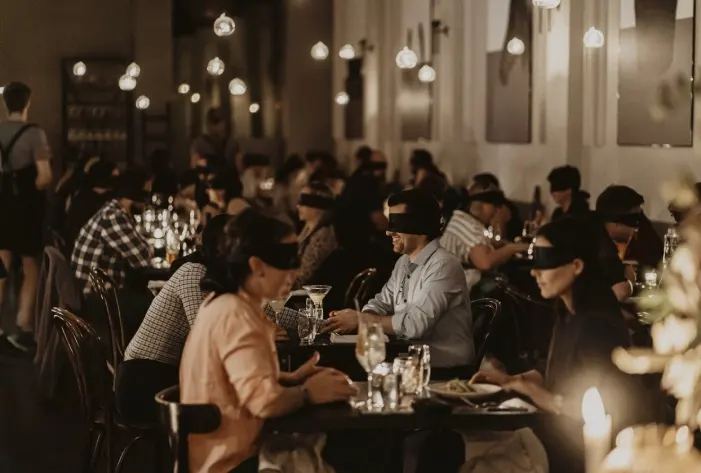
Across the United States, a new wave of “dark dining” restaurants is redefining how Americans experience food. By serving meals in near-total darkness, these restaurants remove visual distractions to amplify taste, texture, emotion, and memory. What chefs are serving—often familiar dishes transformed by sensory design—reveals a powerful shift in dining culture toward meaning, presence, and immersive experiences.
A Strange New Dining Experience Is Captivating America
In a quiet dining room in New York City, the lights fade completely to black. No candles. No ambient glow. Just darkness.
A server gently places a plate in front of a guest who cannot see a single detail of what they’re about to eat. The guest hesitates, lifts a fork, and takes a bite—unsure whether the dish is sweet or savory, hot or cold.
Suddenly, flavors feel louder. Textures feel sharper. Emotions rise unexpectedly.
This is not a performance. This is dark dining—and it’s spreading rapidly across America.
What began years ago as a niche European experiment has evolved into one of the most surprising gourmet trends in the U.S. Today’s dark dining restaurants aren’t just about novelty. They are about psychology, sensory science, memory, and emotional connection.
And what’s being served in the dark may completely change how you think about food.
What Is Dark Dining, Exactly?
Dark dining—also known as “dining in the dark”—is a restaurant experience where guests eat meals in near-total or complete darkness. The purpose isn’t to shock or confuse diners. It’s to remove sight, the sense that dominates how we judge food.
When visual cues disappear, diners rely on:
- Taste
- Smell
- Texture
- Sound
- Emotional memory
Without seeing the food, preconceived ideas about appearance, plating, and cultural bias fall away. Diners experience food more directly and often more intensely.
While early dark dining concepts were tied to empathy for the visually impaired, modern versions have evolved into highly curated culinary experiences blending gastronomy, psychology, and storytelling.
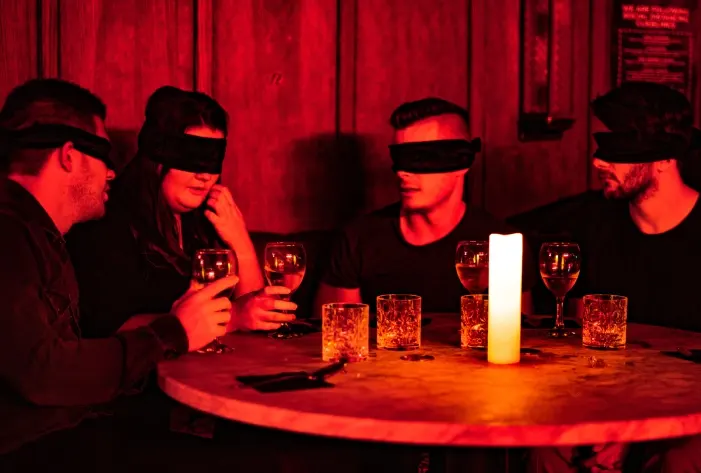
Why Is Dark Dining Suddenly Trending in the U.S.?
This trend isn’t random. It’s a response to major shifts in how Americans relate to food, technology, and attention.
A Rebellion Against Instagram-Driven Food
For years, food culture has been dominated by visuals. Dishes are designed to be photographed before they’re tasted. Bright colors, dramatic plating, and viral presentation often matter more than flavor.
Dark dining removes visuals entirely.
In the dark:
- Presentation becomes irrelevant
- Branding disappears
- Social media loses power
- Flavor takes center stage
For diners burned out on performative eating, dark dining feels honest and refreshing.
A Post-Pandemic Desire for Meaningful Experiences
After the pandemic, Americans began prioritizing experiences that feel emotionally memorable, not just indulgent.
Dark dining offers:
- Presence without screens
- Conversation without distraction
- Curiosity without comparison
In a hyper-connected world, intentional disconnection has become a luxury.
What Are These Dark Dining Restaurants Actually Serving?
Contrary to what many expect, dark dining menus are not filled with bizarre or extreme foods.
Instead, chefs often serve familiar dishes—carefully redesigned to challenge assumptions.
Across the U.S., dark dining menus commonly feature:
- Comfort foods with unexpected textures
- Multi-course tasting menus built on contrast
- Dishes designed to mislead expectations
- Foods that evoke memory and nostalgia
A diner may expect dessert and taste something savory. Expect something soft and discover crunch. Assume meat and encounter vegetables.
The goal isn’t confusion—it’s awareness.
Real-Life Examples From America’s Dark Dining Scene
In New York City, some dark dining venues pair complete darkness with subtle soundscapes—music or ambient audio that shifts with each course. Diners report stronger emotional reactions and deeper conversations.
In Los Angeles, pop-up dark dining experiences often focus on plant-based menus, challenging assumptions about texture and richness without visual cues.
In Chicago, certain chefs use dark dining to present immigrant comfort foods, allowing guests to experience flavors without cultural bias or preconceived labels.
Across these cities, one pattern is clear: dark dining is being treated as serious culinary art, not a gimmick.
Why Food Tastes Different in the Dark
Science supports what diners feel.
Research in sensory psychology shows that vision plays a dominant role in flavor perception. When sight is removed:
- Taste receptors become more sensitive
- Aromas feel stronger
- Texture perception intensifies
- Emotional engagement increases
This explains why food eaten in darkness often feels richer, bolder, and more memorable—even if the recipe itself is simple.
Chefs use this knowledge intentionally, designing dishes that shine when visual judgment is removed.
Is Dark Dining Just a Gimmick?
This is one of the most searched questions—and the answer depends on execution.
Poorly designed dark dining experiences can feel awkward or disorienting. Thoughtfully designed ones feel transformative.
The best dark dining restaurants focus on:
- Clear guidance from trained staff
- Safe and intuitive layouts
- Balanced pacing between courses
- Emotional storytelling through food
When done right, darkness becomes a tool—not a trick.
Who Is Actually Going to Dark Dining Restaurants?
Dark dining attracts a wider audience than many expect.
Common guests include:
- Food enthusiasts seeking something new
- Couples looking for unique date nights
- Corporate groups and team-building events
- Sensory-curious diners
- People burned out on traditional fine dining
Many diners report that conversations feel deeper and more authentic in the dark because visual distractions disappear.
Is Dark Dining Expensive?
Dark dining typically falls into the experience dining category.
Most venues offer:
- Fixed-price menus
- Reservation-only seating
- Experiences lasting 90 to 120 minutes
Prices often resemble tasting menus, but diners frequently report that the value comes from memory and emotion, not luxury ingredients.
You’re paying for presence, not presentation.
Accessibility, Inclusion, and Ethics in Dark Dining
Modern dark dining restaurants are increasingly mindful of accessibility.
Many:
- Collaborate with visually impaired consultants or staff
- Offer optional low-light experiences
- Clearly explain the experience beforehand
Responsible operators focus on education, empathy, and respect—not exploitation.
When approached thoughtfully, dark dining can foster awareness rather than discomfort.
What Dark Dining Reveals About Modern American Taste
This trend reflects deeper cultural shifts.
Americans are craving:
- Fewer distractions
- More intentional presence
- Emotional resonance
- Experiences that feel human
Dark dining strips food back to its essentials and asks diners to engage fully.
What to Expect If You Try Dark Dining for the First Time
Feeling nervous is normal.
Most first-time diners experience:
- Initial disorientation
- Heightened sensory awareness
- Strong emotional responses
- Vivid memories afterward
Helpful tips:
- Wear comfortable clothing
- Keep an open mind
- Avoid rigid expectations
- Trust the experience
The discomfort fades quickly—and curiosity takes over.
Key Takeaways: Why Dark Dining Is Gaining Momentum
- Darkness heightens taste and emotion
- Diners want experiences, not just meals
- Chefs are exploring psychology, not just technique
- Visual burnout is real
- Memory is becoming the new luxury
Dark dining isn’t about hiding food—it’s about revealing it differently.
Frequently Asked Questions (Trending Search Queries)
1. What is dark dining?
Ans. Dark dining is a restaurant experience where guests eat in near-total darkness to heighten non-visual senses.
2. Why do people eat in the dark at restaurants?
Ans. Removing sight intensifies taste, smell, texture, and emotional connection to food.
3. Is dark dining safe?
Ans. Yes. Restaurants are designed for safety, and staff guide guests carefully.
4. What kind of food is served at dark dining restaurants?
Ans. Typically multi-course menus featuring familiar foods reimagined with sensory contrast.
5. Does food actually taste better in the dark?
Ans. Many diners report stronger flavors due to heightened sensory awareness.
6. Are dark dining restaurants expensive?
Ans. Prices vary, but many are comparable to experiential or tasting-menu dining.
7. Can people with anxiety enjoy dark dining?
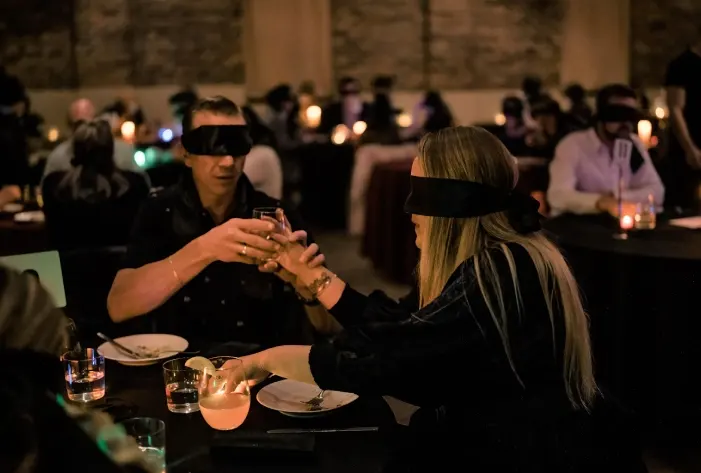
Ans. Experiences vary. Some restaurants offer accommodations or partial darkness.
8. Are dark dining restaurants inclusive of visually impaired people?
Ans. Many collaborate with visually impaired staff and prioritize inclusive design.
9. Is dark dining just a trend or here to stay?
Ans. It aligns with long-term shifts toward experiential dining and is likely to evolve rather than disappear.
10. Where can I find dark dining restaurants in the U.S.?
Ans. Major cities like New York, Los Angeles, Chicago, and San Francisco host permanent venues and pop-ups.
Final Thought: Darkness Isn’t the Point—Awareness Is
Dark dining isn’t about shock value.
It’s about slowing down in a world obsessed with speed and spectacle. It’s about tasting without judgment. Feeling without distraction. Remembering that food is more than how it looks.
In the dark, diners don’t just eat differently.
They notice differently.
And that may be the most radical idea in modern dining.