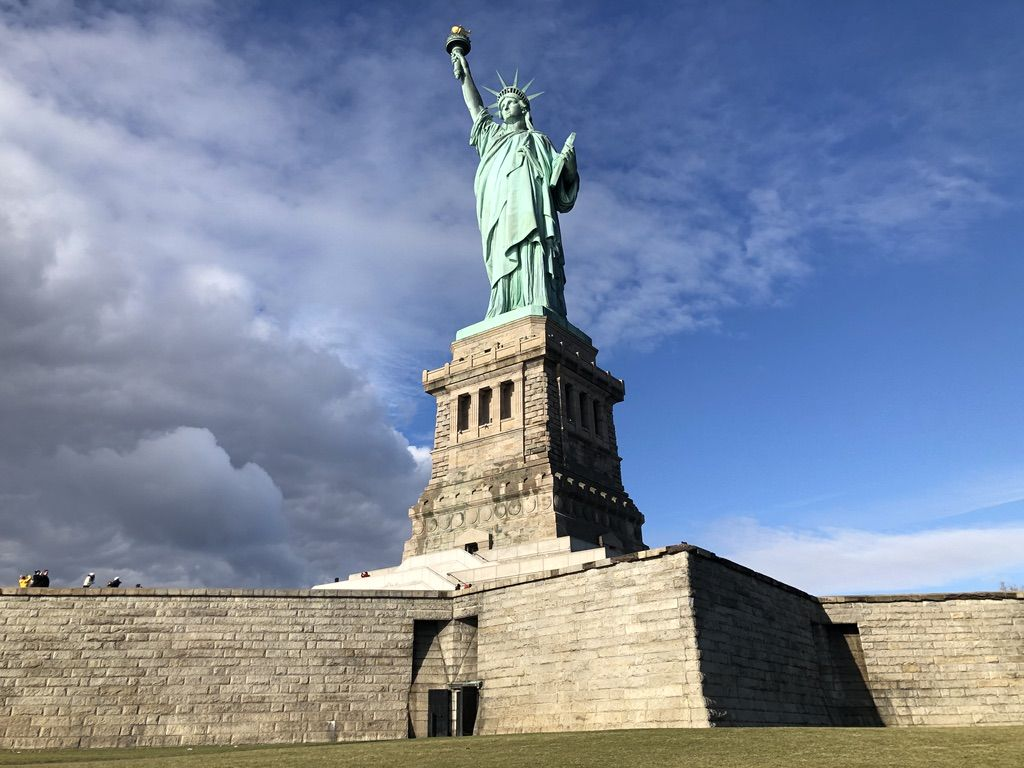
Every year, more than four million visitors travel across New York Harbor to stand in the shadow of one of the most recognizable symbols on Earth: the Statue of Liberty. Cameras flash. Children point upward. Visitors stare at the skyline, absorbing the emotional weight of the moment. For many, it’s a bucket-list experience — a meeting with history.
And yet, almost none of these visitors realize they are walking past a sealed secret.
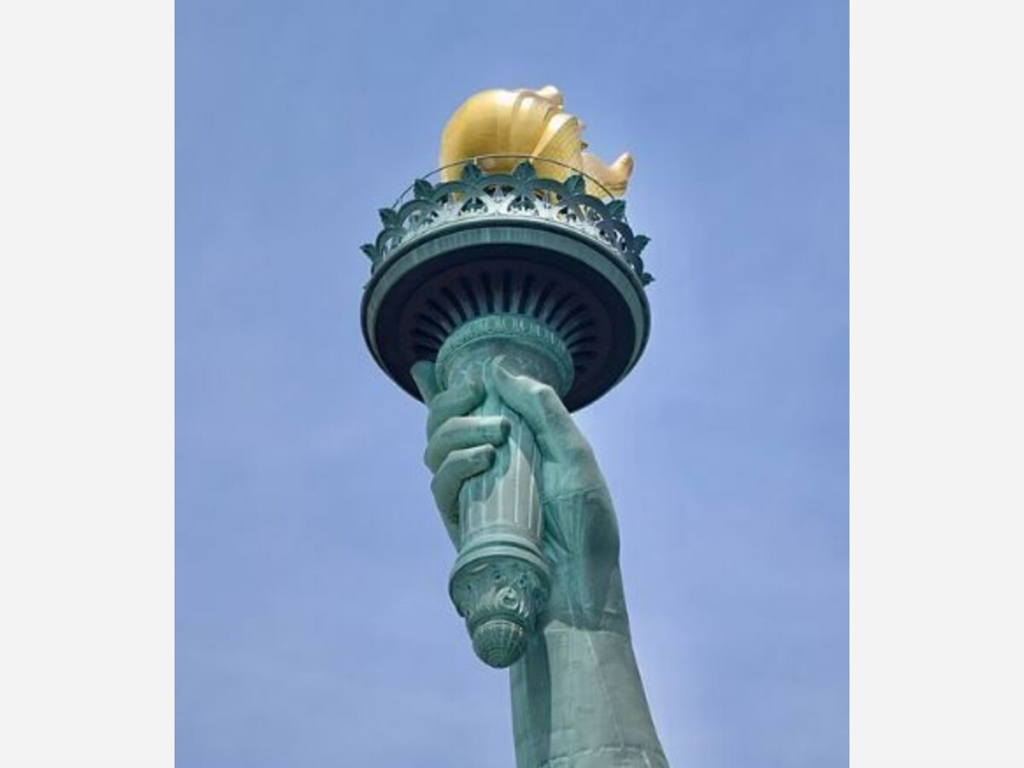
Hidden inside the torch of the Statue of Liberty is a chamber that has been closed to the public for over a century. Not because of simple maintenance. Not because of routine repairs. But because of an act of wartime sabotage so powerful that it changed how America viewed its own safety.
This is not conspiracy theory. It is documented history. And in recent years, historians and archivists have brought this forgotten chapter back into public awareness.
Understanding the truth behind the sealed torch reveals a deeper, more human story about America — a story of vulnerability, resilience, and the price of protecting freedom.
The Hidden Chamber Inside the Statue of Liberty
When tourists look up at the Statue of Liberty’s torch, they assume it is simply another inaccessible part of an aging monument. Most people believe it was closed for safety reasons tied to structural fragility. The truth is far more dramatic.
Inside the torch is a staircase that visitors once climbed. In the early years after the statue opened in 1886, tourists were allowed to ascend into the torch itself. From there, they could look out over the harbor — a view reserved today only for historic photographs.
That access ended permanently in 1916.
The closure was the result of a massive explosion known as the Black Tom sabotage attack — an event that sent shockwaves across New York Harbor and physically damaged the monument. The torch staircase was deemed unsafe after the blast, and authorities made a decision that still stands today: it would never reopen.
The sealed torch became a silent time capsule.
Millions pass beneath it each year without realizing they are standing beside a preserved scar from World War .
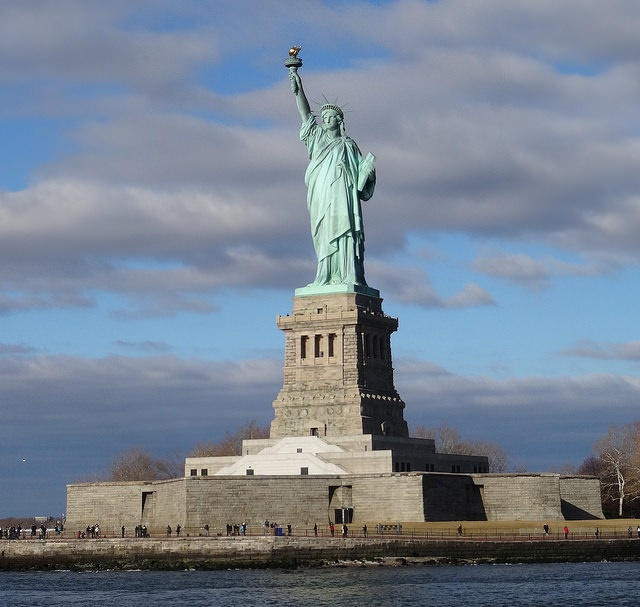
The Night America Was Attacked Before Entering World War I
On July 30, 1916, a munitions depot on Black Tom Island in New Jersey exploded with a force equivalent to a small earthquake. The depot stored weapons and explosives bound for Allied forces fighting in Europe. At the time, the United States was officially neutral.
Investigators later concluded the explosion was an act of German sabotage designed to disrupt Allied supply chains. The blast shattered windows across Manhattan, rattled buildings miles away, and sent shrapnel into the Statue of Liberty.
The shockwave damaged the statue’s arm and torch structure. Visitors were inside the monument when it happened. Panic spread as the harbor lit up with fire and debris.
The torch staircase, once a popular tourist attraction, was declared unsafe after the attack. Rather than rebuild the area in a way that altered the monument’s original design, authorities sealed it.
That decision transformed the torch into one of America’s most famous inaccessible spaces.
Why the Torch Was Never Reopened
From a modern engineering perspective, reopening the torch would be technically possible. But preservation is not just about engineering — it is about ethics.
Historic preservation experts argue that landmarks should retain evidence of the events that shaped them. The torch damage became part of the statue’s story. Rebuilding it completely would erase a moment when American soil was violently touched by global war.
The decision to keep it sealed reflects a philosophy shared by preservationists worldwide:
History should be remembered, not polished away.
Visitors can still climb to the crown. They can still walk through the pedestal museum. But the torch remains permanently closed — not as a failure of maintenance, but as a deliberate act of historical honesty.
Why Most Tourists Have Never Heard This Story
The Statue of Liberty is marketed primarily as a symbol of hope and immigration. Tour narratives focus on Ellis Island, the arrival of millions of immigrants, and the statue’s message of freedom.
The sabotage chapter is darker. It complicates the story.
For decades, tourist education emphasized inspiration over vulnerability. But historians now argue that omitting the Black Tom explosion removes a critical layer of American identity. The attack forced the nation to confront the reality that isolation from global conflict was an illusion.
Teachers who include the explosion in their lessons report stronger student engagement. When students learn the statue survived an attack, it transforms the monument from abstract symbolism into a survivor of history.
Suddenly, Liberty isn’t just an icon. She’s a witness.
A Symbol That Survived Violence
Americans often imagine landmarks as timeless and untouched. But monuments are not immune to history. They endure the same chaos that shapes nations.
The sealed torch represents a turning point:
- It marks the moment war reached American shores
- It accelerated federal security reforms
- It shifted public opinion about global conflict
- It revealed national vulnerability
- It strengthened resolve to protect democratic ideals
Historians believe the Black Tom explosion contributed to growing support for America’s entry into World War I the following year. The attack shattered the illusion of distance from European war.
The Statue of Liberty, originally a welcoming beacon, became a reminder that freedom requires vigilance.
Rediscovery in the Digital Age
For much of the 20th century, the sealed torch faded into obscurity. It existed in archives, textbooks, and specialist circles, but rarely entered public conversation.
The digital era changed that.
Declassified records became accessible online. Historians published digitized documents. Social media creators began telling the story in short-form videos. Suddenly, millions learned the truth in minutes.
Modern travelers increasingly arrive at Liberty Island already asking about the sealed chamber. Rangers report that visitors now view the monument with curiosity rather than assumption.
The secret has become part of the experience.
And that reflects a broader cultural shift: Americans want the full story — not just the polished version.
Seeing the Evidence Today
While repairs addressed structural damage, preservation teams intentionally left traces of history embedded within the monument. These marks are subtle. Most visitors miss them because they focus on photographs rather than observation.
But for those who ask questions, the monument becomes a living archive.
Visitors who learn about the explosion often describe a change in emotional perspective. The statue stops being a backdrop and starts being a participant in history.
It becomes personal.
Hidden Stories Make Landmarks Human
Why do Americans love hidden landmark stories?
Because secrets create connection.
A flawless monument feels distant. A monument that survived violence feels relatable. It mirrors the national experience — triumph intertwined with hardship.
Psychologists studying cultural memory note that people bond more deeply with symbols that carry scars. The sealed torch adds emotional depth to the Statue of Liberty’s message. It transforms freedom from an abstract idea into something defended and preserved.
That is a powerful narrative.
Other Famous Landmarks With Hidden Spaces
The Statue of Liberty is not alone in guarding secrets. Many American landmarks contain sealed chambers and restricted areas:
- Mount Rushmore holds a hidden hall of records
- The Lincoln Memorial includes structural vaults
- The Golden Gate Bridge contains maintenance corridors
- The White House has sealed wartime bunkers
These hidden spaces fascinate visitors because they reveal that monuments evolve. They adapt. They survive.
But the sealed torch remains unique because it intersects with immigration, war, and identity — three pillars of American history.
How to Visit With Historical Depth
A visit to Liberty Island can be more than sightseeing. It can be an act of discovery.
To experience the monument fully:
- Book crown access tickets months in advance
- Visit the museum before climbing
- Attend ranger-led history talks
- Ask about the Black Tom explosion
- Explore Ellis Island archives
- Read firsthand accounts from 1916
Tourists who engage with the history report a deeper emotional connection. The visit becomes less about photography and more about understanding.
And understanding transforms travel.
What the Sealed Torch Teaches Us Today
The lesson of the sealed torch is not fear.
It is awareness.
Freedom is not static. It requires protection. It carries history. It survives conflict.
Knowing the statue was attacked does not weaken its symbolism. It strengthens it. The monument endured, just as the nation endured.
And that endurance is part of what Americans celebrate.
The secret inside the torch is not a shameful chapter. It is a testament to resilience.
Frequently Asked Questions (FAQ)
1. Why is the Statue of Liberty torch closed to the public?
It was closed after damage caused by the 1916 Black Tom explosion, an act of wartime sabotage during World War I.
2. Can visitors ever go inside the torch again?
The National Park Service has indicated reopening is extremely unlikely due to safety and preservation concerns.
3. Was the Statue of Liberty attacked during a war?
Yes. The Black Tom explosion was a German sabotage attack that damaged the monument before the U.S. entered World War I.
4. How powerful was the explosion?
Historians estimate it was equivalent to a 5.5 magnitude earthquake and shattered windows across New York Harbor.
5. Did anyone die in the attack?
There were injuries and extensive property damage, but fatalities were limited compared to the scale of destruction.
6. Is the damage still visible today?
Some preserved evidence remains intentionally embedded as historical testimony.
7. Why isn’t this story widely taught in schools?
Many curricula focus more on immigration symbolism than wartime sabotage history.
8. Does the Statue of Liberty Museum mention the explosion?
Yes, the museum includes references and artifacts related to the event.
9. Are there other sealed spaces in American landmarks?
Yes, many historic monuments contain restricted chambers for safety and preservation.
10. What does the sealed torch symbolize today?
It represents resilience, vulnerability, and the ongoing responsibility to protect freedom.
Final Reflection
Tourists walk past the sealed torch every day without realizing they are standing beside a preserved moment of history. The Statue of Liberty is not just a symbol of arrival. It is a symbol of survival.
Knowing the truth does not dim its light.
It makes the flame burn brighter.
Because liberty is not powerful despite its scars.
It is powerful because of them.