American heritage is far more complex than the simplified version many people learn in school. It is a living story shaped by immigration, struggle, innovation, erased voices, and cultural reinvention. Understanding the hidden truth about American heritage reveals how contradictions built the nation — and how confronting the full story strengthens unity, identity, and civic resilience rather than weakening it.
American heritage is often presented as a clean timeline: founding fathers, westward expansion, industrial growth, global leadership. It sounds orderly. Predictable. Heroic.
But real heritage is not tidy.
The hidden truth about American heritage is that it is layered, contested, evolving, and deeply human. It is a story of triumph and contradiction existing side by side. A nation built on liberty tolerated slavery. A country founded by immigrants repeatedly feared immigration. A democracy that promised equality struggled to extend it to all.
These are not embarrassing footnotes. They are the engine of American identity.
Heritage is not propaganda. It is memory — and memory includes both pride and pain. Nations that mature are not the ones with perfect pasts. They are the ones brave enough to examine their imperfect ones.
According to research from the Smithsonian Institution, more than 40% of preserved American historical artifacts relate to everyday cultural life rather than political milestones. This reveals an overlooked truth: heritage is shaped more by ordinary people than by famous speeches or monuments. The real story of America lives in kitchens, factories, farms, neighborhoods, and family traditions.
Understanding this fuller narrative does not weaken patriotism. It deepens it.
Why Do Many Americans Feel Disconnected From Their Own Heritage?
A surprising number of Americans struggle to define what American heritage actually means. Ask ten people and you will likely hear ten different answers.
For some, heritage is constitutional ideals and national symbols. For others, it is ancestry and family migration. For many younger Americans, it feels abstract — something distant from daily life.
The disconnect happens because American heritage has been compressed into a simplified national myth, leaving personal histories underrepresented. When people do not see their ancestors reflected in the larger story, heritage feels like someone else’s narrative.
Consider real-life examples:
A Mexican-American family in Texas celebrates Día de los Muertos alongside Thanksgiving. A Nigerian-American household blends African naming ceremonies with Fourth of July barbecues. A Midwestern family preserves Scandinavian baking traditions passed down for five generations. These customs are not “ethnic side notes.” They are American heritage itself.
Yet public discourse often frames heritage as singular instead of plural. This creates emotional distance.
Key reasons for disconnection include:
- School curricula focusing heavily on political elites
- Regional histories overshadowed by national myths
- Immigrant traditions treated as foreign rather than American
- Generational gaps in storytelling within families
- Political polarization turning history into ideology
When people reconnect personal memory with national history, heritage becomes intimate rather than abstract.
The Parts of American History That Rarely Make Headlines
The hidden truth is not that American history is secretly dark. It is that it is selectively illuminated.
Entire chapters receive minimal attention despite shaping modern America profoundly. For instance, immigrant labor built much of the nation’s infrastructure. Chinese railroad workers risked their lives constructing transcontinental railways. Mexican laborers sustained agriculture in the Southwest. Caribbean workers powered urban domestic economies.
Yet their contributions are often summarized in a paragraph instead of centered in the narrative.
Another overlooked reality is Indigenous continuity. Many Americans unconsciously treat Native history as something that ended in the 19th century. In reality, Indigenous nations remain active political communities with vibrant cultures. According to the U.S. Census Bureau, over 9 million Americans identify as Native American or Alaska Native in full or part — living heritage, not historical relics.
Similarly, enslaved Africans did not merely endure oppression; they built economic systems that financed early American wealth while simultaneously shaping music, language, religion, and cuisine. African American culture is not a side branch of American heritage — it is one of its foundations.
Other overlooked areas include:
- Women’s informal political influence before suffrage
- Labor union movements that secured modern workplace protections
- Immigrant mutual aid societies that replaced nonexistent safety nets
- Cultural fusion in jazz, blues, and rock music
- Urban communities erased by redevelopment policies
These stories complicate the narrative — but complication is a sign of truth, not weakness.
Immigration: The Force That Constantly Redefines America
Every generation believes its immigrants are different. Dangerous. Unassimilable.
History repeatedly proves the opposite.
German immigrants in the 1800s were accused of cultural stubbornness. Irish Catholics were labeled incompatible with democracy. Italian communities were feared as criminal enclaves. Today, these traditions are woven seamlessly into American identity.
Pizza, public schooling reforms, labor organizing, music, and literature all carry immigrant fingerprints.
The hidden truth is that American heritage survives not by resisting change, but by absorbing it.
According to the Pew Research Center, immigrants and their children make up more than a quarter of the U.S. population. This demographic reality confirms that American culture is not static inheritance — it is a continuous negotiation between generations.
Real-life example: Jazz, born in New Orleans, fused African rhythms, European instruments, and Caribbean influences. Once dismissed as fringe music, jazz now symbolizes American creativity worldwide. This transformation mirrors the immigrant story itself: marginal at first, foundational later.
Immigration impacts include:
- Culinary expansion shaping everyday diets
- New religious traditions expanding civic tolerance
- Entrepreneurial revitalization of local economies
- Artistic innovation influencing global culture
- Linguistic blending enriching everyday speech
American heritage grows through addition, not replacement.
Why Heritage Becomes Politically Charged
Heritage is never neutral. It determines belonging.
Debates over monuments, school curricula, and public memory are not merely historical disputes. They are struggles over identity and power. When societies argue about the past, they are really arguing about the present.
Some Americans fear acknowledging injustice diminishes national pride. Others believe ignoring injustice weakens moral credibility. Both sides respond to the emotional weight of heritage.
The American Historical Association emphasizes that reinterpretation is not revisionism — it is scholarship evolving with new evidence. Nations that examine their past honestly tend to build stronger civic institutions.
Consider the controversy surrounding Confederate monuments. For some communities, these statues represented heritage and regional memory. For others, they symbolized oppression. The debate revealed how shared geography does not guarantee shared experience.
Understanding this tension is essential. Heritage carries emotional inheritance. It is lived, not abstract.
The Myth of a Single American Identity
One of the most persistent misunderstandings is the idea that America once possessed a single unified cultural identity that later fractured.
In reality, America began as a mosaic.
From the colonial era onward, the continent contained Indigenous nations, European settlers, enslaved Africans, religious dissenters, frontier traders, and immigrant enclaves. Unity emerged not from sameness but from negotiated coexistence.
This pluralism explains why disagreement is embedded in American civic life. Debate is not a failure of identity — it is evidence of it.
Core characteristics of American identity include:
- Loyalty to constitutional principles over ethnicity
- Regional diversity stronger than cultural uniformity
- Reinvention treated as social virtue
- Cultural borrowing normalized
- Argument viewed as democratic participation
The absence of a single identity is the country’s defining trait.
Family Stories: Where Real Heritage Lives
Ask Americans about heritage and most won’t cite legislation. They will tell family stories.
A grandmother who crossed an ocean with nothing. A grandfather who survived the Great Depression. Parents who worked double shifts to secure opportunity. These narratives transform national history into personal legacy.
Research in intergenerational psychology shows families that preserve storytelling report stronger identity and resilience. Heritage survives through repetition — stories told at dinner tables, rituals passed through holidays, recipes that act as edible archives.
Real-life example: Military families often preserve wartime letters that humanize historical conflicts. Immigrant families pass down language fragments and food traditions that anchor identity across generations. These small artifacts carry enormous emotional continuity.
Heritage is not only preserved in museums. It is preserved in memory.
How Americans Can Reconnect With Their Heritage Today
Heritage is not passive inheritance. It requires active exploration.
Modern Americans possess unprecedented access to genealogical databases, digital archives, and cultural institutions. Reconnection is more achievable than ever — but it demands intention.
Practical actions include:
- Interview older relatives and record their stories
- Digitize photographs and preserve documents
- Research ancestry through public archives
- Visit local museums and cultural centers
- Participate in community history projects
- Learn traditional recipes and languages
- Support Indigenous and minority heritage initiatives
The goal is not nostalgia. It is continuity. Knowing where one comes from changes how one navigates the present.
Why Facing the Hidden Truth Strengthens Unity
Avoiding difficult history creates fragile identity. Honest confrontation creates durable cohesion.
Countries that acknowledge complexity tend to experience higher civic trust. Studies published in the Journal of Social Identity Studies indicate that societies engaging openly with historical contradictions show stronger democratic resilience.
This suggests a paradox: the more honestly a nation examines its past, the more stable its future becomes.
Americans do not need a flawless origin story. They need a truthful one.
A mature heritage narrative recognizes achievement and injustice, courage and failure, creativity and exploitation. It accepts that progress emerged from struggle rather than inevitability.
This understanding fosters empathy — across generations, cultures, and communities.
Heritage becomes not a battlefield, but a shared archive of lessons.
The Emotional Power of a Complete Story
The hidden truth about American heritage is not scandalous. It is human.
It is a record of people striving, failing, adapting, and rebuilding. It is messy because human societies are messy. Yet within that mess lies resilience.
When citizens engage fully with their history, they gain perspective. They understand that modern conflicts are not signs of collapse, but echoes of earlier struggles the country survived.
The American story is not about perfection. It is about persistence.
And that persistence is the real inheritance.
Frequently Asked Questions (Trending Searches)
1. Why is American heritage considered controversial today?
Because heritage intersects with race, identity, and political power. Different communities experience history differently, leading to competing interpretations.
2. Is learning uncomfortable history unpatriotic?
No. Most historians argue it strengthens civic responsibility and democratic maturity.
3. How accurate are American history textbooks?
Textbooks simplify complex narratives. They are starting points, not complete archives.
4. Why are historical monuments being debated?
Communities reassess which symbols reflect shared values in the present.
5. Does immigration weaken American culture?
Historical evidence shows immigration expands and revitalizes cultural identity.
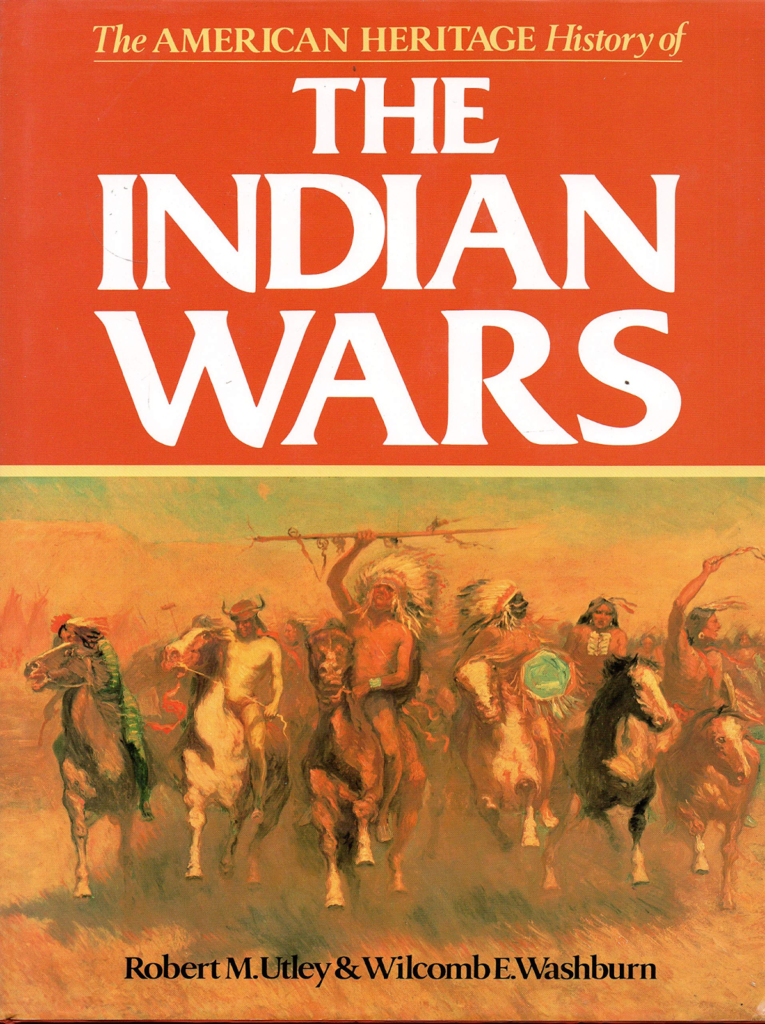
6. Are Indigenous cultures still active in America?
Yes. Native nations remain politically and culturally vibrant today.
7. How can families preserve their heritage?
Through storytelling, archiving records, and maintaining traditions.
8. Why do people interpret the same history differently?
Heritage is filtered through personal experience and cultural memory.
9. Can America have multiple identities simultaneously?
Yes. Pluralism is central to the nation’s structure.
10. How does heritage influence modern politics?
Historical memory shapes debates about policy, justice, and belonging.
Final Reflection
The hidden truth about American heritage is not a scandal waiting to be exposed. It is a conversation waiting to be completed.
America is not defined by a single origin myth. It is defined by an ongoing negotiation between memory and possibility. Its strength lies in the ability to absorb contradiction without collapsing.
When citizens understand their past honestly, they inherit not shame or pride — but wisdom.
And wisdom is the most powerful legacy any nation can pass forward.